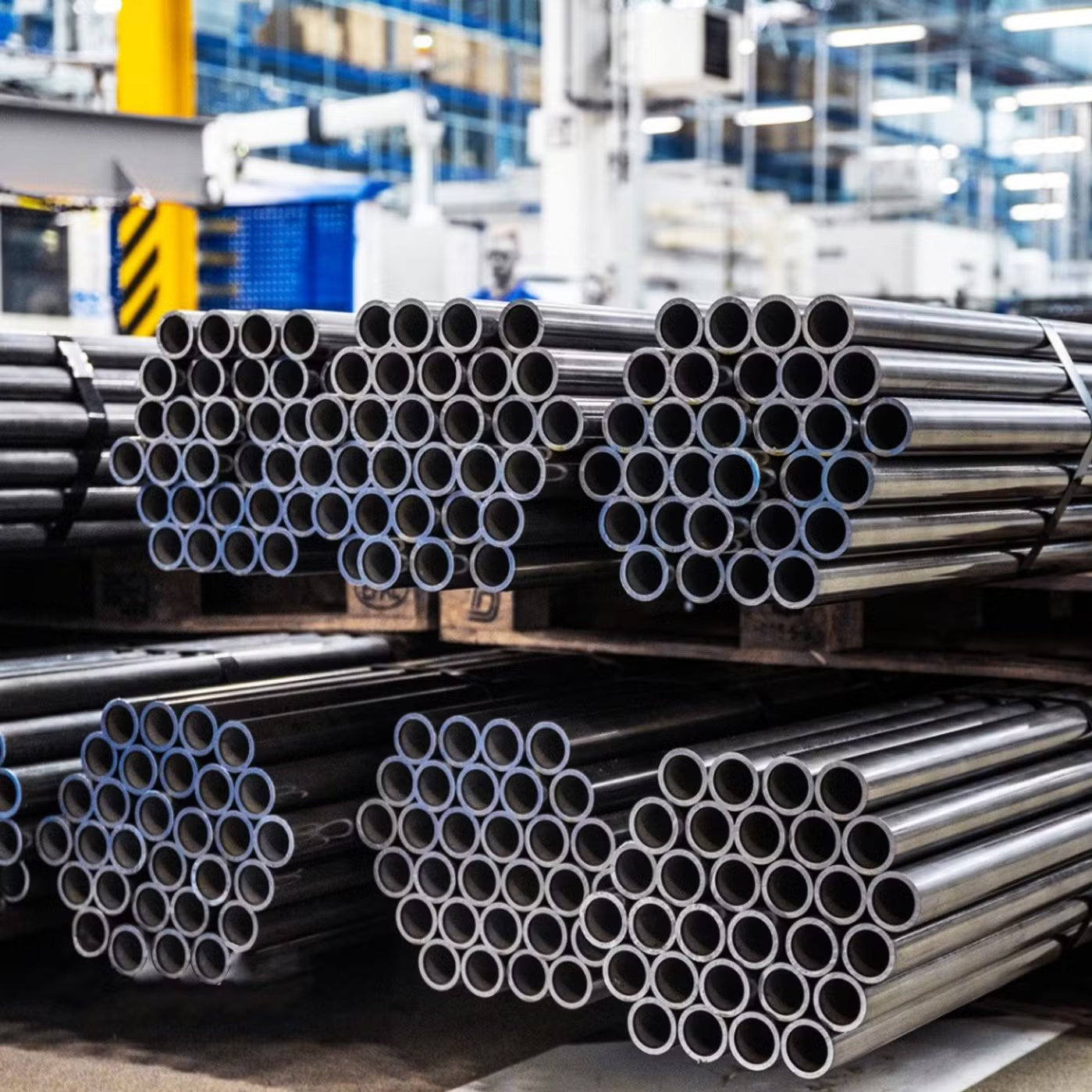
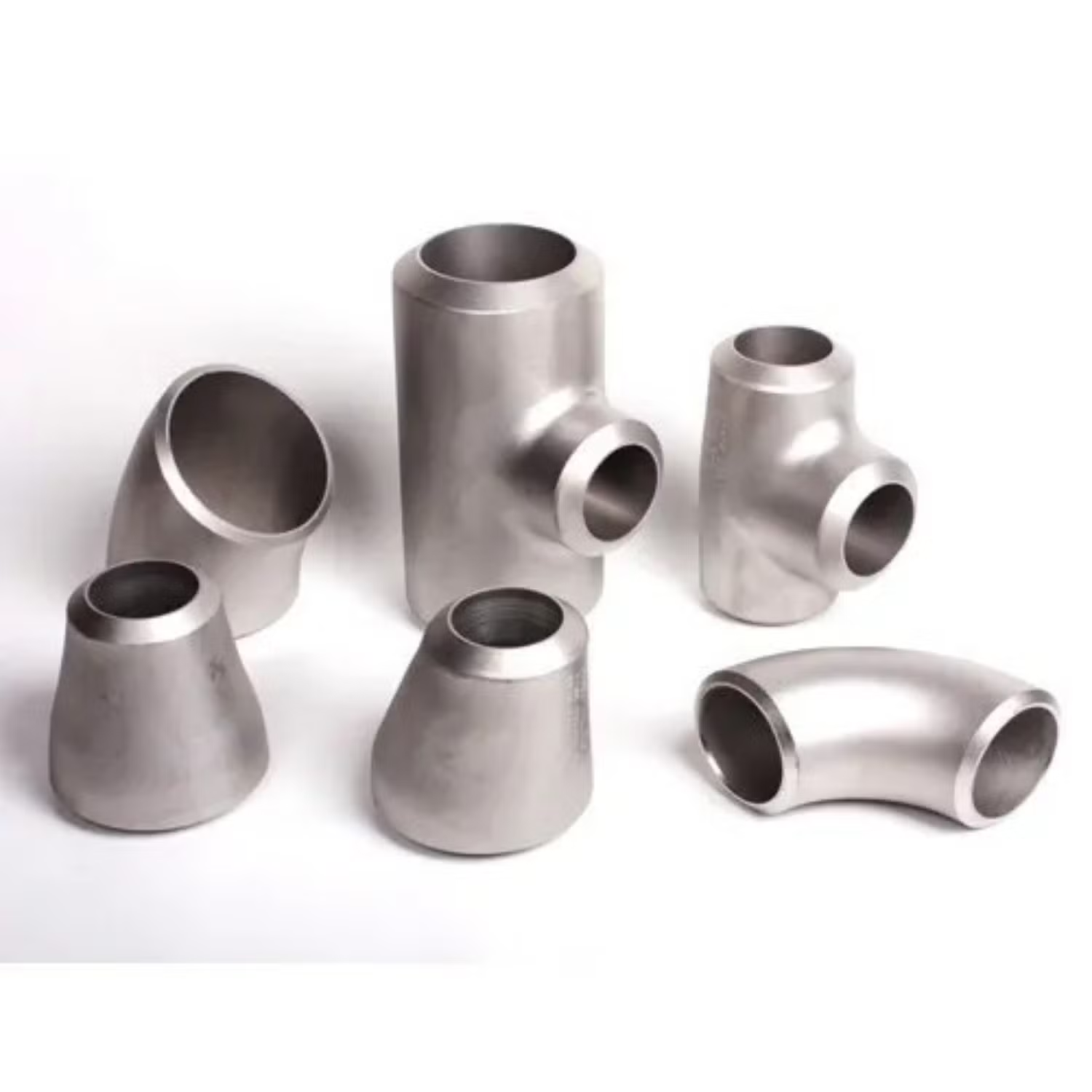
Stainless Steel
Stainless steel is renowned for its exceptional corrosion resistance, high durability, and structural strength in demanding industrial environments. It is a critical material for chemical, petrochemical, and hygienic industries where longevity and purity are paramount. Our high-grade stainless steel products offer superior weldability and integrity, ensuring reliable performance that meets global international standards.
Stainless Steel Technical Specifications
Standards Compliance
| ASTM | A312, A376, A358, A269, A249, A403, A182, A351 |
|---|---|
| ASME | SA312, SA376, SA358, SA269, SA249, SA403, SA182, SA351 |
Chemical Compositions
| Grade | C | Cr | Ni | Mo | Others |
|---|---|---|---|---|---|
| 304 | 0.08 | 18.0~20.0 | 8.00~10.50 | - | - |
| 304L | ~0.030 | 18.0~20.0 | 9.00~13.00 | - | - |
| 310S | ~0.08 | 24.0~26.0 | 19.0~22.0 | - | - |
| 316 | ~0.08 | 16.0~18.0 | 10.0~14.0 | 2.00~3.00 | - |
| 316L | ~0.08 | 16.0~18.0 | 12.0~15.0 | 2.00~3.00 | - |
| 316Ti | 0.08 | 16.0~18.0 | 10.0~14.0 | 2.00~3.00 | Ti 5xC%~ |
| 317L | 0.03 | 18.0~22.0 | 11.0~15.0 | 3.00~4.00 | - |
| 321 | ~0.08 | 17.0~19.0 | 9.00~13.00 | - | Ti 5xC%~ |
| 347 | 0.08 | 17.0~19.0 | 9.00~13.00 | - | Nb10xC%~ |
Mechanical Compositions
| Grade | Yield Strength | Tensile Strength | Elongation | Hardness |
|---|---|---|---|---|
| 304 | 205~ | 520~ | 40~ | ~200 |
| 304L | 175~ | 480~ | 40~ | ~200 |
| 310S | 205~ | 520~ | 40~ | ~200 |
| 316 | 205~ | 520~ | 40~ | ~200 |
| 316L | 175~ | 480~ | 40~ | ~200 |
| 316Ti | 205~ | 520~ | 40~ | ~200 |
| 317L | 175~ | 480~ | 40~ | ~200 |
| 321 | 205~ | 520~ | 40~ | ~200 |
| 347 | 205~ | 520~ | 40~ | ~200 |
Physical Properties
| Grade | Sp. Heat | Sp. Gravity | Thermal Exp. | Thermal Cond. |
|---|---|---|---|---|
| 304 | 0.50 | 7.93 | 17.3 | 16.3 |
| 304L | 0.50 | 7.93 | 17.3 | 16.3 |
| 310S | 0.50 | 7.98 | 15.9 | 14.2 |
| 316 | 0.50 | 7.98 | 15.9 | 16.3 |
| 316L | 0.50 | 7.98 | 15.9 | 16.3 |
| 316Ti | 0.50 | 7.98 | 15.9 | 16.3 |
| 317L | 0.486 | 7.98 | 16.5 | 14.4 |
| 321 | 0.50 | 7.93 | 16.7 | 16.1 |
| 347 | 0.50 | 7.98 | 16.7 | 16.1 |
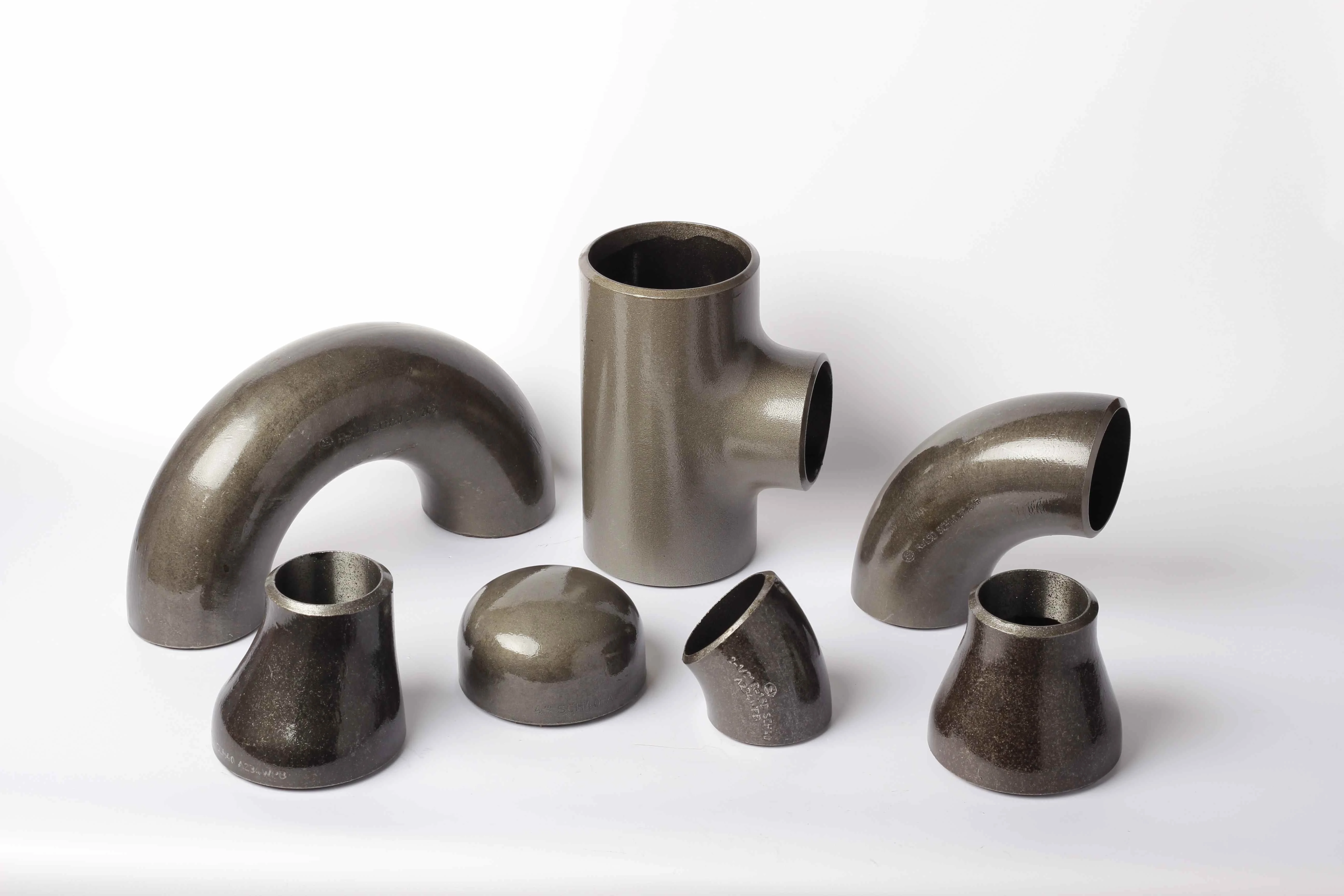
Carbon Steel
Carbon steel stands as the backbone of modern industrial infrastructure, offering an optimal balance of high tensile strength, durability, and cost-effectiveness. Our high-grade carbon steel products are meticulously engineered to withstand rigorous operational conditions, making them the ideal choice for high-pressure piping, structural frameworks, and heavy-duty machinery. With excellent weldability and consistent performance, our solutions provide a reliable and long-lasting foundation for your most critical engineering projects.
Carbon Steel Specification
| Grade Specification | Carbon Steel: ASTM/ASME A234 WPB / A860 – MSS-SP-75 WPHY 42 / 46 / 52 / 56 / 60 / 65 / 70Low temperature Steel: A420 WPL3 / A420 WPL6 |
| Type of Carbon steel Pipe Fittings | Seamless / Welded / Fabricated |
| Bending Radius | R=1D, 2D, 3D, 5D, 6D, 8D, 10D or Custom |
| Range | ½”NB to 48″NB in Sch 10s, 40s, 80s, 160s, XXS. |
| Dimensions | ANSI/ASME B16.9, B16.28, MSS-SP-43. |
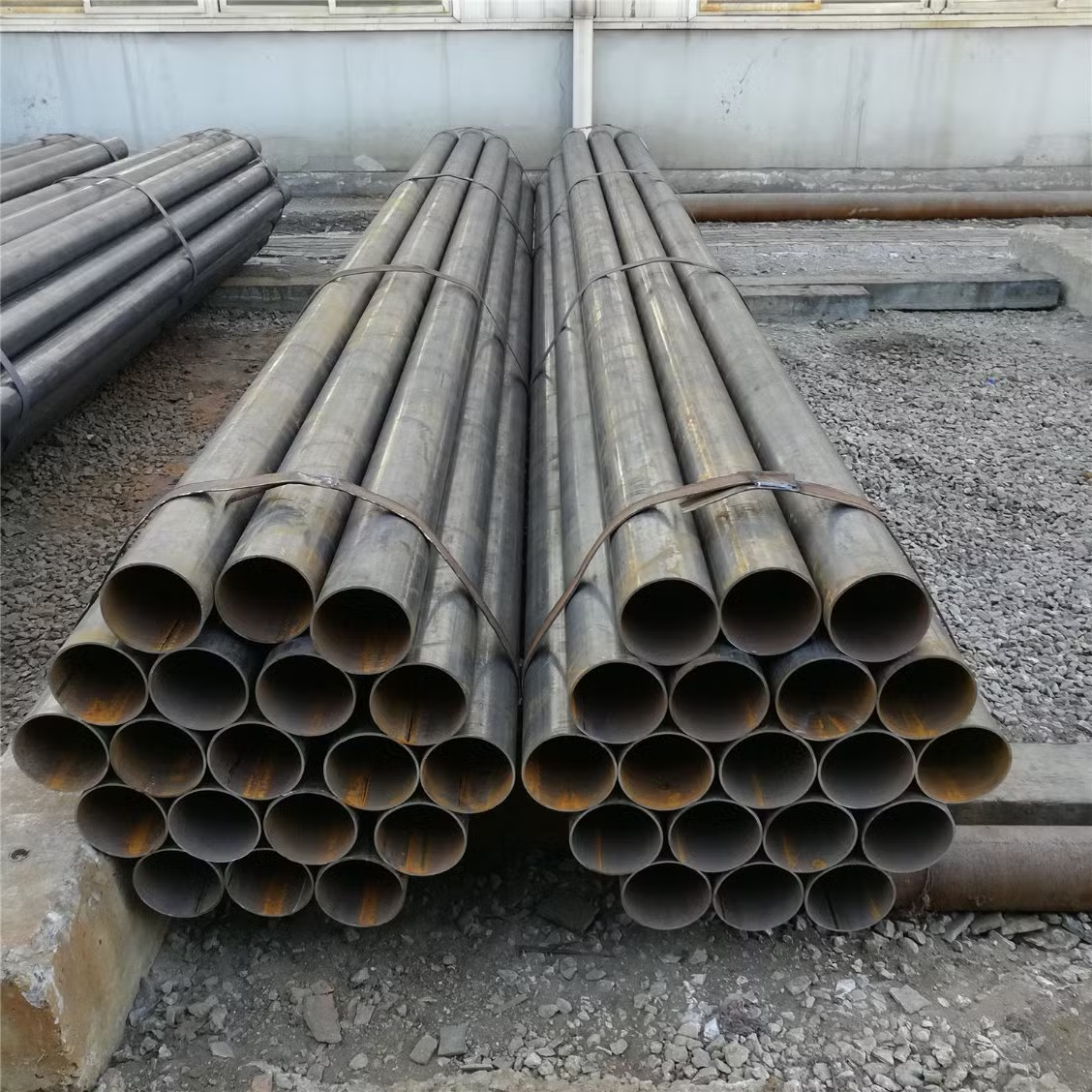
Mild Steel
Mild steel, also known as low-carbon steel, is one of the most versatile and widely used materials in the engineering and construction sectors. Known for its excellent balance of ductility, machinability, and weldability, it serves as an ideal solution for a vast range of applications, from structural steel beams and piping to automotive components and general fabrication. Renowned for its cost-effectiveness and reliability, our high-quality mild steel products provide the strength and structural integrity required for critical projects, ensuring long-lasting performance and stability.
Specification Of Pipe
| Size: | 15mm NB to 150mm NB (1/2” to 6”), 7″ (193.7mm OD to 20″ 508mm OD) |
|---|---|
| Form | Round, Square, Rectangular, Coil, U Tube, |
| Length | As per customer’s requirement (Maximum upto 7 meters) |
| End | Plain End, Bevelled End |
| Type | Seamless / ERW / Welded |
| Certification For Mild Steel | Mill Test Certificate as per EN 10204 / 3.2B |
| Dimensional Tolerances | IS: 1239 (Pt I) – 2004, Equivalent to BS – 1387 / 1985 |
| OD Range | 1.250″ – 6.000″ (30-150mm) |
| Wall Range | 0.095″ – 1.000″ (.2.5-25mm) |
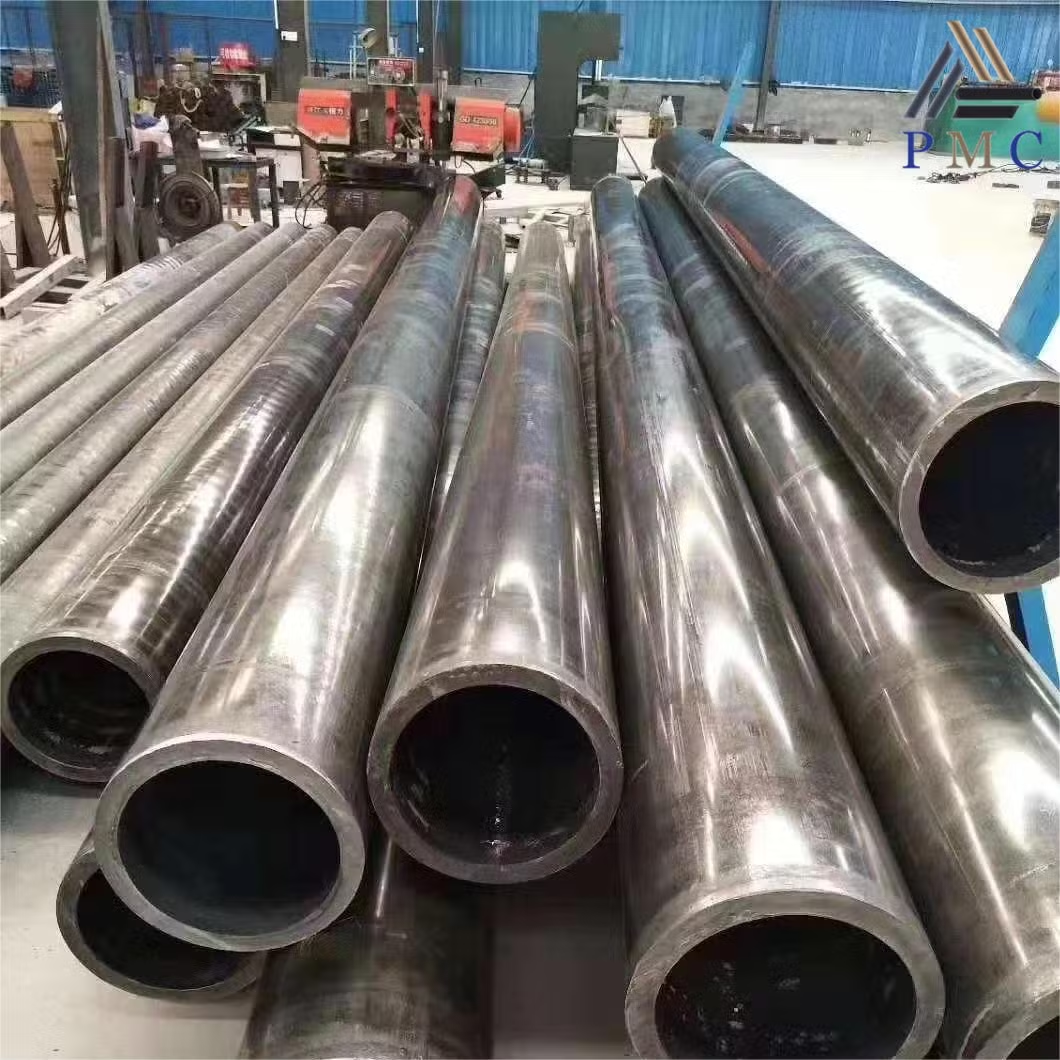
High Nickel Alloy
High Nickel Alloys are engineered to deliver superior performance in the most challenging industrial environments. Offering exceptional resistance to extreme temperatures, oxidation, and corrosive media, these alloys are the industry standard for chemical processing, power generation, and oil and gas applications. Our high nickel alloy products provide unmatched structural integrity and longevity, ensuring that your critical systems operate efficiently even under the most severe conditions. Experience reliability where it matters most with materials built for extreme endurance.
Chemical Compositions
Alloy |
Ni |
Mn |
Fe |
Si |
Cu |
C |
Ti |
Ni 200 |
Min 99.2 |
Max 0.30 |
Max 0.2 |
Max 0.10 |
Max 0.20 |
Max 0.10 |
Max 0.10 |
Ni 201 |
Min 99.2 |
Max 0.30 |
Max 0.2 |
Max 0.10 |
Max 0.20 |
Max 0.05 |
Max 0.10 |
Ni 205 |
Min 99.6 |
Max 0.20 |
Max 0.2 |
Max 0.10 |
Max 0.10 |
Max 0.05 |
Max 0.05 |
Ni 205 LC |
Min 99.6 |
Max 0.20 |
Max 0.2 |
Max 0.10 |
Max 0.10 |
Max 0.02 |
Max 0.05 |
Mechanical Properties
Alloy |
Tensile strength N/mm² |
Elongation % at L0 =100 mm |
||
Min |
Max |
Min |
Max |
|
Ni 200/201 |
400 |
550 |
20 |
30 |
Ni 205/205 LC |
400 |
530 |
20 |
30 |
Aluminum
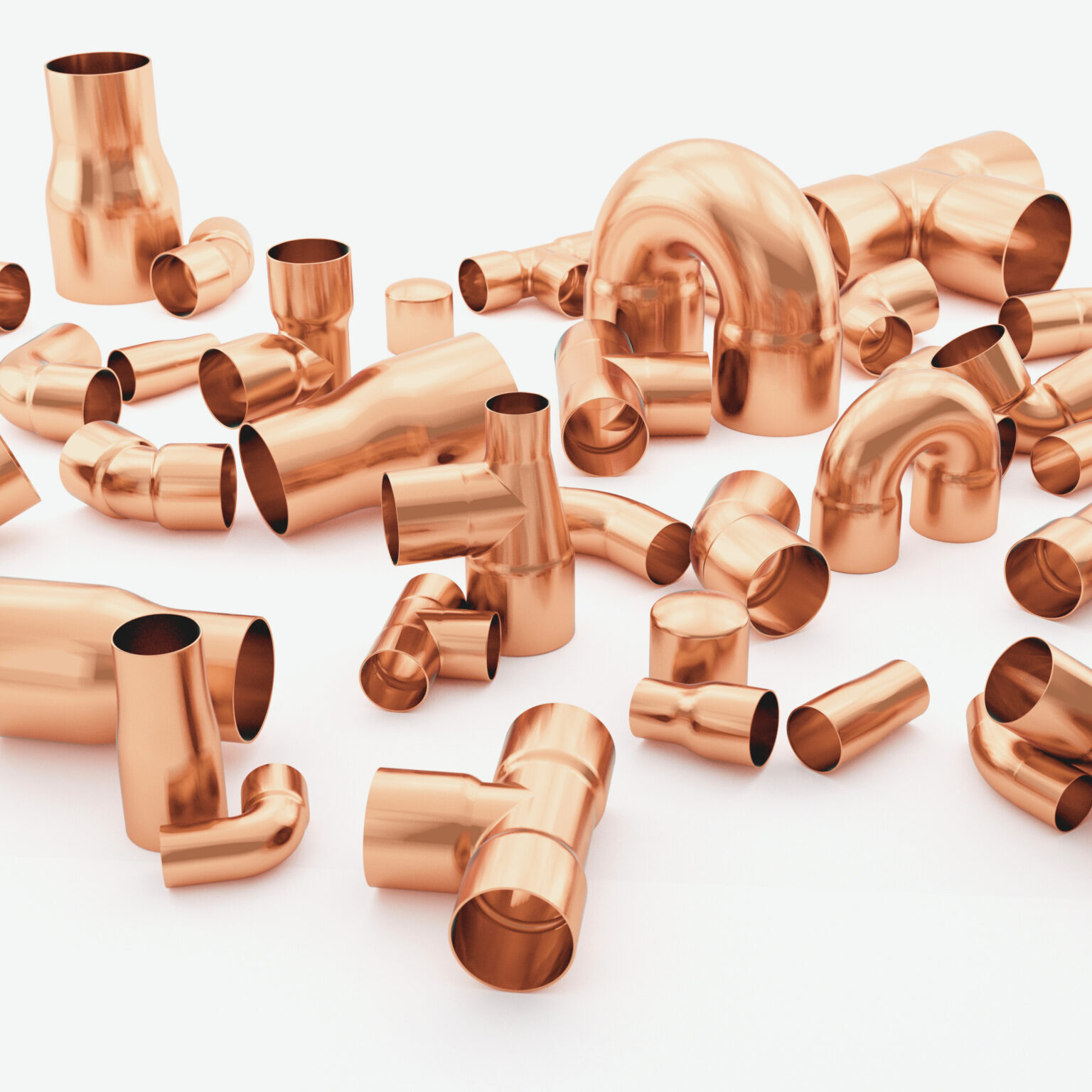
Aluminum is highly valued in modern engineering for its exceptional strength-to-weight ratio, excellent corrosion resistance, and remarkable versatility. It provides a lightweight yet robust solution, making it an essential material for aerospace, automotive, marine, and construction industries. Our high-grade aluminum products offer superior thermal and electrical conductivity, combined with ease of fabrication. Whether for complex structural components or precision-engineered systems, our aluminum solutions deliver the durability, efficiency, and performance required for your most demanding industrial applications.
Chemical Compositions
| Alloy | Chemical Composition (%) | Mechanical Properties |
|---|---|---|
| Alloy 2024 | Copper: 3.8-4.9 | Tensile Strength: 470 MPa<br>Yield Strength: 325 MPa<br>Elongation: 20%<br>Hardness (Brinell): 120 |
| Manganese: 0.3-0.9 | ||
| Magnesium: 1.2-1.8 | ||
| Silicon: 0.5 | ||
| Zinc: 0.25 | ||
| Alloy 6061 | Magnesium: 0.8-1.2 | Tensile Strength: 310 MPa<br>Yield Strength: 276 MPa<br>Elongation: 12%<br>Hardness (Brinell): 95 |
| Silicon: 0.4-0.8 | ||
| Iron: 0.7 | ||
| Copper: 0.15-0.4 | ||
| Zinc: 0.25 | ||
| Titanium: 0.15 | ||
| Alloy 7075 | Zinc: 5.1-6.1 | Tensile Strength: 570 MPa<br>Yield Strength: 503 MPa<br>Elongation: 11%<br>Hardness (Brinell): 150 |
| Magnesium: 2.1-2.9 | ||
| Copper: 1.2-2.0 | ||
| Chromium: 0.18-0.28 | ||
| Others: 0.2 max | ||
| Alloy 5083 | Magnesium: 4.0-4.9 | Tensile Strength: 330 MPa<br>Yield Strength: 240 MPa<br>Elongation: 12%<br>Hardness (Brinell): 75 |
| Manganese: 0.40 | ||
| Chromium: 0.05-0.25 | ||
| Iron: 0.4 | ||
| Others: 0.15 max |
Copper
Copper is a foundational material in industrial engineering, globally recognized for its superior electrical and thermal conductivity. It serves as an indispensable component in high-performance electrical systems, heat exchangers, and critical plumbing infrastructure. Beyond its exceptional conductivity, copper offers remarkable corrosion resistance, ductility, and malleability, facilitating precise fabrication for complex engineering requirements. Our high-purity copper products are meticulously manufactured to ensure maximum efficiency and durability, providing the reliable foundation necessary for your most demanding industrial, electrical, and heat-transfer applications.
Properties
ALLOY |
WROUGHT |
CAST |
Copper |
C10100 - C13000 |
C80100 - C81200 |
Brass |
C20500 - C28580 |
C83300 - C85800 |
Tin Brass |
C40400 - C48600 |
C83300 - C84800 |
Phosphor Bronze |
C50100 - C52400 |
C90200 - C91700 |
Aluminum Bronze |
C60800 - C64210 |
C95200 - C95900 |
Silicon Bronze |
C64700 - C66100 |
C87000 - C87999 |
Silicon Red Brass |
C69400 - C69710 |
C87300 - C87900 |
Copper Nicke; |
C70100 - C72950 |
C96200 - C96900 |
Nickle Silver |
C73500 - C79900 |
C97300 - C97800 |
Chemical & Mechanical Properties
| Property | Value |
|---|---|
| Chemical Symbol | Cu |
| Atomic Number | 29 |
| Atomic Mass | 63.546 u |
| Density | 8.96 g/cm³ |
| Melting Point | 1084.62°C (1984.32°F) |
| Boiling Point | 2562°C (4643.6°F) |
| Electrical Conductivity (at 20°C) | 58.0 × 10^6 S/m (megaSiemens per meter) |
| Thermal Conductivity (at 20°C) | 401 W/(m·K) (Watts per meter-Kelvin) |
| Specific Heat Capacity | 0.385 J/(g·K) (Joules per gram-Kelvin) |
| Young's Modulus | 110–128 GPa |
| Shear Modulus | 48–55 GPa |
| Bulk Modulus | 130–140 GPa |
| Poisson's Ratio | 0.34–0.36 |
| Tensile Strength | 210–220 MPa (for annealed copper) |
| Yield Strength | 205–220 MPa (for annealed copper) |
| Elongation at Break | 30–60% (for annealed copper) |
| Hardness (Vickers) | 40–80 HV (for annealed copper) |
Brass
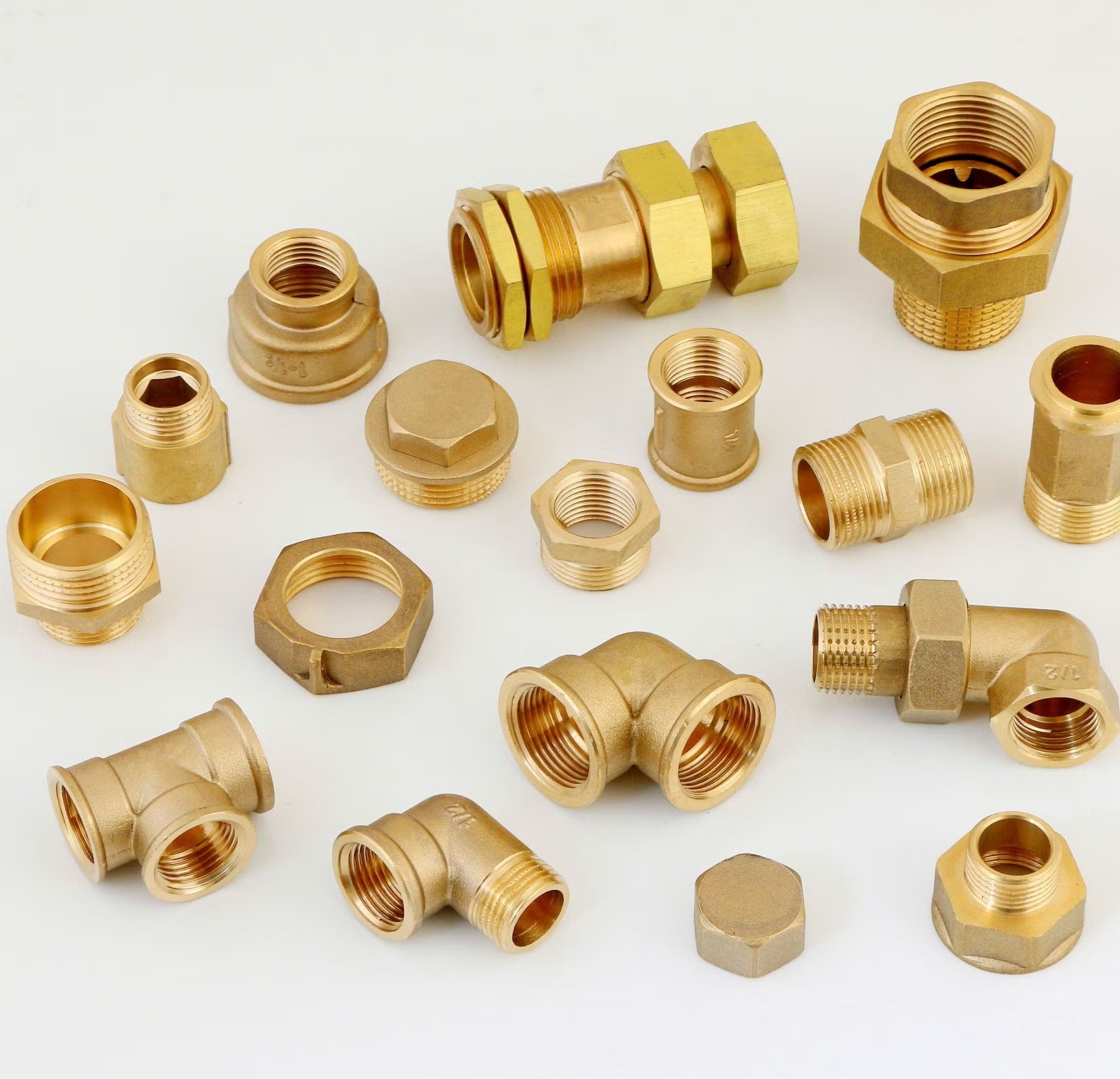
Brass, a versatile alloy primarily composed of copper and zinc, is celebrated for its exceptional machinability, aesthetic appeal, and natural corrosion resistance. It offers a unique combination of strength and ductility, making it a preferred material for manufacturing complex components, precision valves, fittings, and intricate decorative hardware. Due to its excellent acoustic properties and inherent antimicrobial characteristics, brass remains indispensable across diverse industries ranging from automotive and plumbing to marine engineering and interior design. Our high-quality brass products are precision-engineered to provide consistent mechanical performance and long-lasting durability, ensuring they meet the stringent demands of your specific industrial and architectural applications.
Applications of Brass
| Property | Value |
|---|---|
| Chemical Symbol | Brass is an alloy, primarily composed of copper (Cu) and zinc (Zn) |
| Composition | Typically, brass contains around 60-80% copper and 20-40% zinc, with small amounts of other elements such as lead, aluminum, or tin for specific properties. |
| Density | Varies depending on the specific composition of the alloy, typically ranges from 8.4 to 8.7 g/cm³ |
| Melting Point | Varies depending on the composition, typically between 900°C to 940°C (1652°F to 1724°F) |
| Young's Modulus | 90–110 GPa (for common brass alloys) |
| Shear Modulus | 33–40 GPa (for common brass alloys) |
| Bulk Modulus | 100–140 GPa (for common brass alloys) |
| Poisson's Ratio | 0.33–0.36 (for common brass alloys) |
| Tensile Strength | 290–620 MPa (for common brass alloys) |
| Yield Strength | 150–450 MPa (for common brass alloys) |
| Elongation at Break | 10–40% (for common brass alloys) |
| Hardness (Brinell) | 65–230 HB (for common brass alloys) |
| Electrical Conductivity | Brass has good electrical conductivity, typically around 23–45 MS/m (megaSiemens per meter) depending on the alloy composition and condition. |
| Thermal Conductivity | Varies depending on the composition, typically ranges from 100 to 130 W/(m·K) (Watts per meter-Kelvin) for common brass alloys. |
Copper Nickel
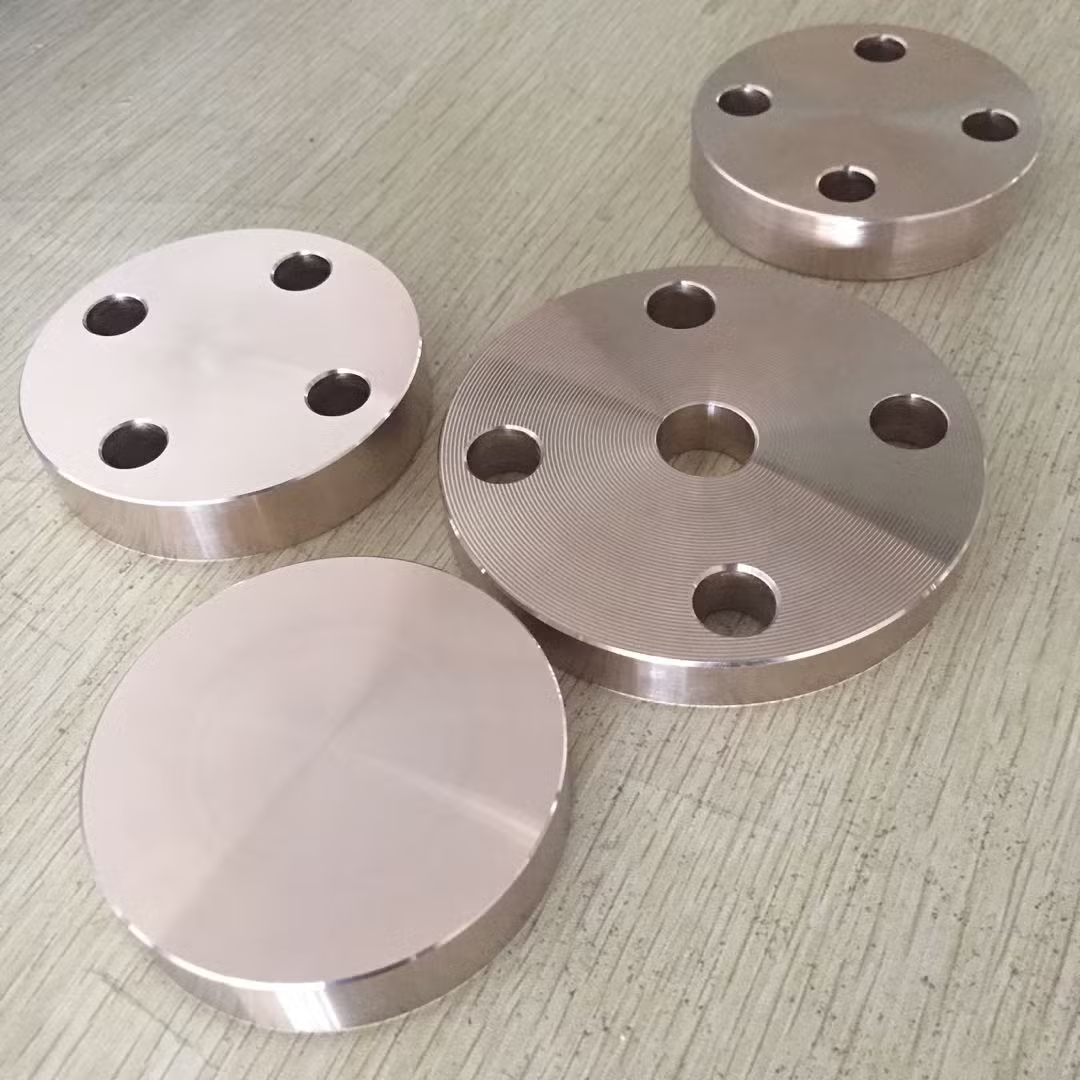
Brass, a versatile alloy primarily composed of copper and zinc, is celebrated for its exceptional machinability, aesthetic appeal, and natural corrosion resistance. It offers a unique combination of strength and ductility, making it a preferred material for manufacturing complex components, precision valves, fittings, and intricate decorative hardware. Due to its excellent acoustic properties and inherent antimicrobial characteristics, brass remains indispensable across diverse industries ranging from automotive and plumbing to marine engineering and interior design. Our high-quality brass products are precision-engineered to provide consistent mechanical performance and long-lasting durability, ensuring they meet the stringent demands of your specific industrial and architectural applications.
Chemical and Mechanical Properties of Copper Nickel Alloys
| Property | 90/10 Copper Nickel | 70/30 Copper Nickel |
|---|---|---|
| Chemical Composition | Cu: 90%, Ni: 10%, Mn: 1.0% max, Fe: 1.0% max | Cu: 70%, Ni: 30%, Mn: 1.0% max, Fe: 1.0% max |
| Corrosion Resistance | Excellent in seawater and saline environments | Exceptional in marine environments, resistant to stress corrosion cracking |
| Tensile Strength | 240 - 345 MPa | 380 - 500 MPa |
| Yield Strength | 105 - 210 MPa | 140 - 345 MPa |
| Elongation at Break | 30 - 45% | 25 - 35% |
| Hardness (HV) | 80 - 120 HV | 90 - 140 HV |
| Thermal Conductivity | 20 - 45 W/mK | 30 - 50 W/mK |
| Electrical Conductivity | 5.0 - 8.0 MS/m | 5.5 - 9.0 MS/m |
| Melting Point | ~ 1170°C | ~ 1170°C |
| Density | 8.9 g/cm³ | 8.9 g/cm³ |